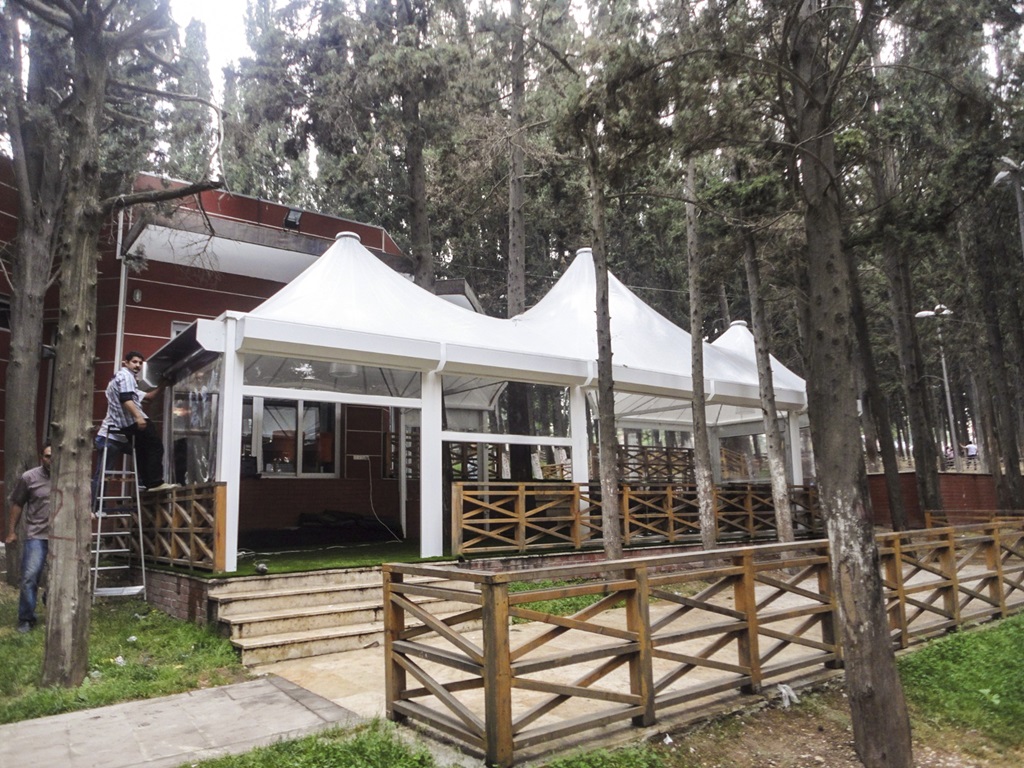
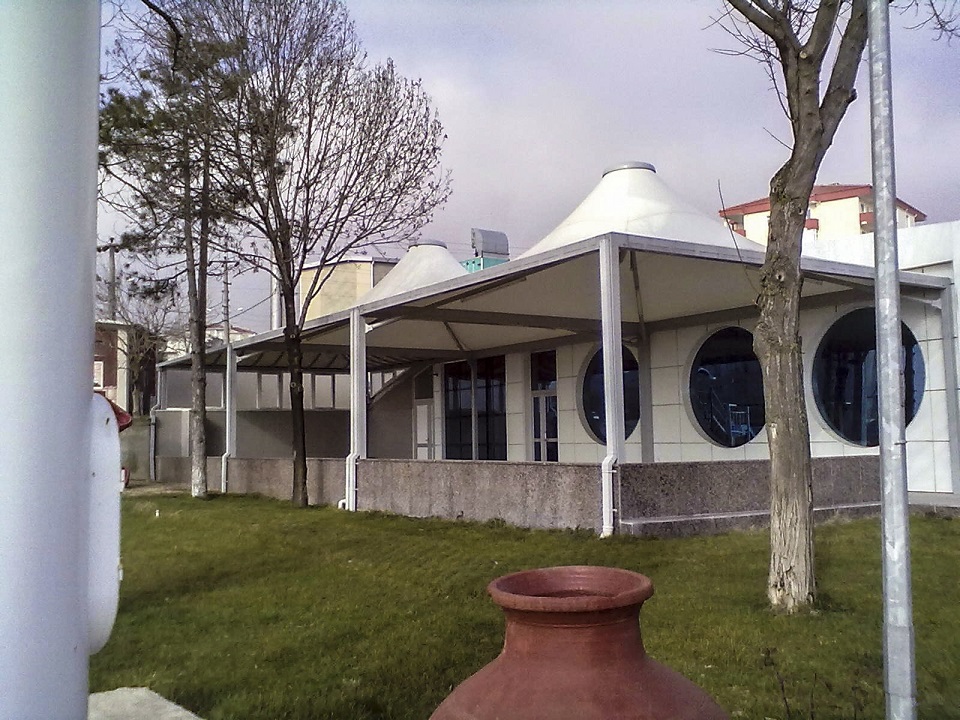
Tensile membrane systems are architectural shade structures made of tensioned membrane surfaces and the posts, beams and arches that carry their loads. Because they span large areas with few supports, they are used for car parks, playgrounds, stands, courtyards and large open spaces.
How do they work?
Structural membranes have no bending or compression stiffness; their only load-bearing property is tensile strength. Their resistance to wind and snow loads relies on two principles:
- Form: an anticlastic (double-curved) surface in which every point is in equilibrium.
- Pre-stress: the membrane is tensioned during installation to control deformation under load.
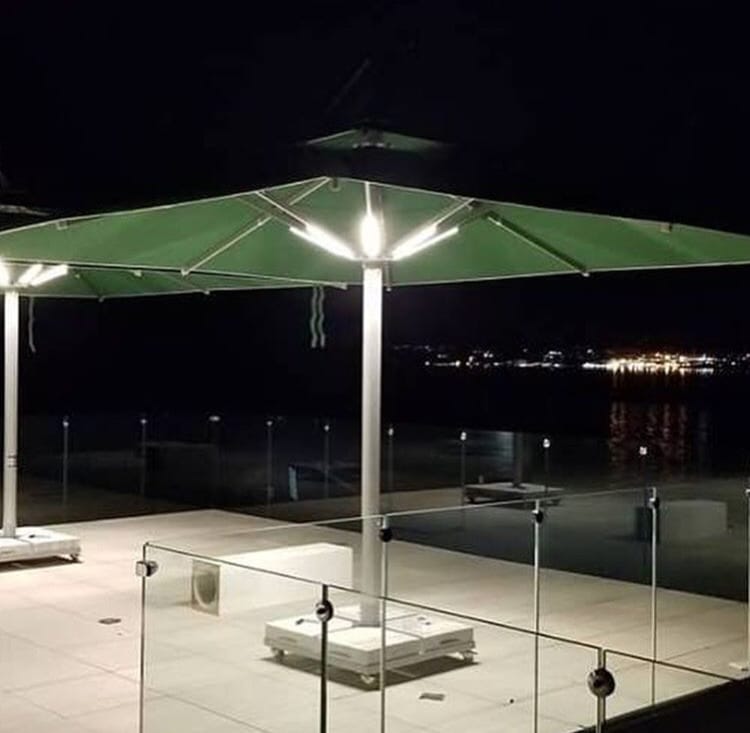
Such structures must therefore be designed following principles specific to tensile systems. For smaller shade areas see membrane parasols or double-open awnings.
What determines the price?
- Area to cover
- Membrane type
- Support structure
- Ground conditions
As each project is unique, we quote after a survey and preliminary design. Request a site survey.